How to Get Started in Mobile Home Park Investing: A Smart Beginner’s Guide
Start Small, Learn the Business, Then Scale Up
Everyone always says, ‘It takes money to make money.’ And look, that’s partially true—you do need capital to make deals happen. But here’s what most people get wrong: they think they need to go big right out of the gate.
Let me share what I’ve learned from almost 20 years of doing this, including plenty of mistakes along the way. If you’re just starting out, there’s a much smarter path forward.
Start with 20-30 Units Minimum
I’d focus on 30 units or more as your starting point, with an absolute minimum of 20 units. Now, that’s going to take you outside of expensive states like California. You’re going to end up somewhere in Arizona—Tucson, Phoenix—or Texas, where you can actually find really great mobile home parks in that 20 to 30 unit range.
Why 20-30 units minimum? It’s all about risk mitigation.
The Numbers Game: Why Scale Matters
Here’s the thing: if you have 1 or 2 homes that either get damaged, stop paying rent, or you have any type of disaster—tornado, whatever the case may be—you lose a percentage of your income, but you don’t lose 50% or 100%.
Compare that to single-family rentals. If that person moves out, you’re down 100% of that property’s income for 2 or 3 months while you find a new tenant. That’s a huge hit.
The numbers game of having more scale is really valuable. With 25 homes, if two people move out, you’re only down 8% of your income, not 100%. You can weather that storm without breaking a sweat.
It’s More Doable Mentally—and That Matters
I would suggest people start in that 20-30 unit range because it’s more doable mentally. It’s not as stressful. You’re not going to be lying awake at night worrying about one vacancy wiping out your entire cash flow.
When you’re starting out, the mental game is just as important as the financial game. You need to be able to learn and make mistakes without feeling like the sky is falling every time something goes wrong.
How We Scaled: The Real Numbers
Let me show you how we actually grew this business, because I think it’ll give you a realistic roadmap:
• First deal: $600,000
• Second deal: $1.3 million
• Third deal: $2.3 million
You just start doing one deal, then another, and you start growing. Pretty soon you’re doing bigger and bigger deals. But it doesn’t happen overnight, and it shouldn’t. Each deal teaches you something that prepares you for the next level.
Learn to Operate at Smaller Scale First
It’s more important to learn how to operate at smaller scale where you’re not going to kill yourself over it. You don’t want to feel like you’re risking too much money from investors on your first couple deals.
Because here’s the reality: you’re going to have a lot of learning experiences going through your first 2 to 3 deals. That’s not pessimism—that’s just how it works. Nobody gets everything perfect right out of the gate.
You want to keep those first deals at levels where if you lose everyone’s money—worst case scenario—you can make it back and pay everybody off. That’s not because you’re planning to fail. It’s because you’re being responsible about the learning curve.
The Biggest Lesson: Complicated Doesn’t Mean Better Returns
Here’s something that surprised me over the years: some of the biggest projects we’ve done, and the most complicated projects we’ve done, have ended up returning the least amount on a return standpoint.
You’d think the bigger, more complex deals would give you better returns because of all the value-add potential. But that’s not always how it works out. The complications eat into your returns—through delays, unexpected costs, management headaches, and just the sheer amount of capital you have to deploy to fix everything.
So we’re now focused on higher quality assets going in. And you know what? The returns on those typically are better. Less headache, better cash flow, more predictable outcomes.
The Warren Buffett Rule for Mobile Home Parks
It’s kind of like a Warren Buffett rule that we’ve adopted: you’re better off paying a fair price for a good business than getting a great price on a business that’s not that good.
Think about that for a second. A ‘great deal’ on a problem property isn’t actually a great deal if you spend the next three years dealing with deferred maintenance, tenant issues, permit problems, and infrastructure failures.
Meanwhile, a park that’s well-maintained, has stable tenants, and operates smoothly might cost you more upfront, but it’s going to throw off cash flow from day one and won’t keep you up at night. That’s the real deal.
What This Means for Your First Deal
So when you’re looking at that first deal, here’s what I want you to focus on:
Size: 20-30 units minimum, ideally 30+
Location: Landlord-friendly states like Arizona or Texas where the numbers actually work
Quality: Don’t go after the absolute worst property just because it’s cheap
Risk level: Keep it at a level where you can handle the learning curve without catastrophic consequences
Mental stress: Make sure the deal size won’t keep you up at night worrying about every little thing
You’re not trying to hit a home run on deal number one. You’re trying to get a solid single or double, learn the business, build your confidence and systems, and then scale from there.
The Patient Path to Building Real Wealth
Look, I get the temptation to go big right away. You see the potential, you get excited, and you want to accelerate the timeline.
But here’s what I’ve learned over almost two decades: the people who build real, lasting wealth in this business are the ones who are patient enough to learn the fundamentals first. They start at a manageable scale, they get their systems dialed in, they make their mistakes on smaller deals, and then they scale up methodically.
Our first deal was $600K. Now we’re doing deals in the millions. But that progression happened over years, not months. And every step along the way taught us something that made us better operators.
Don’t skip those steps. Don’t try to jump from zero to a $5 million deal. Start with something in that 20-30 unit range, learn to operate it well, generate some returns for your investors, build your track record, and then use that experience and credibility to do the next, bigger deal.
Quality Over Complexity
And remember that lesson about complicated projects: you don’t need to take on the most distressed, most problematic property to make good money.
In fact, you’ll probably make better returns and have a lot less stress by paying a fair price for a quality asset that’s already operating reasonably well. Fix the little things, optimize operations, maybe raise rents to market rates over time, and collect steady cash flow.
That’s not sexy. It’s not going to make for an exciting story about how you turned around a disaster property. But it’s going to put money in your pocket and your investors’ pockets, and it’s going to teach you the fundamentals of operations without overwhelming you.
The Bottom Line
Does it take money to make money? Sure, you need capital to get deals done. But you don’t need millions of dollars and you don’t need to start with massive, complicated projects.
Start with 20-30 units in a landlord-friendly state. Focus on quality over getting the absolute cheapest deal. Learn to operate at that scale where mistakes won’t be catastrophic. Build your systems, build your track record, and then scale up.
That’s the path that actually works. It’s not the fastest path, but it’s the sustainable path. And in this business, sustainable beats fast every single time.
Be patient. Be smart. Start at a level that’s mentally manageable. And build from there.
—
Disclaimer: This article reflects personal experience and opinions. It is not financial, tax, legal, or investment advice. Real estate investing involves risk. Always consult with qualified professionals before making investment decisions.
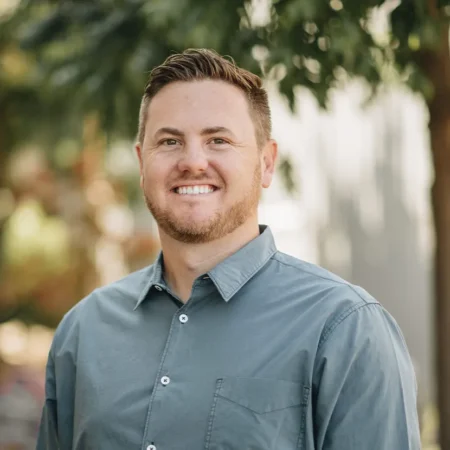
Blake Comfort
Blake Co-Founded Comfort Communities in 2008 and began working to acquire manufactured home communities in order to build the investment and management company that exists today. Comfort Communities first manufactured home community was purchased in 2009 and has continued to grow and purchase many more manufactured home communities ever since. Blake currently handles all the business development & acquisitions for Comfort Communities.